KnowChem ELN®
(01) Electronic Lab Notebook © 2026
(01) (Read more) © 2026

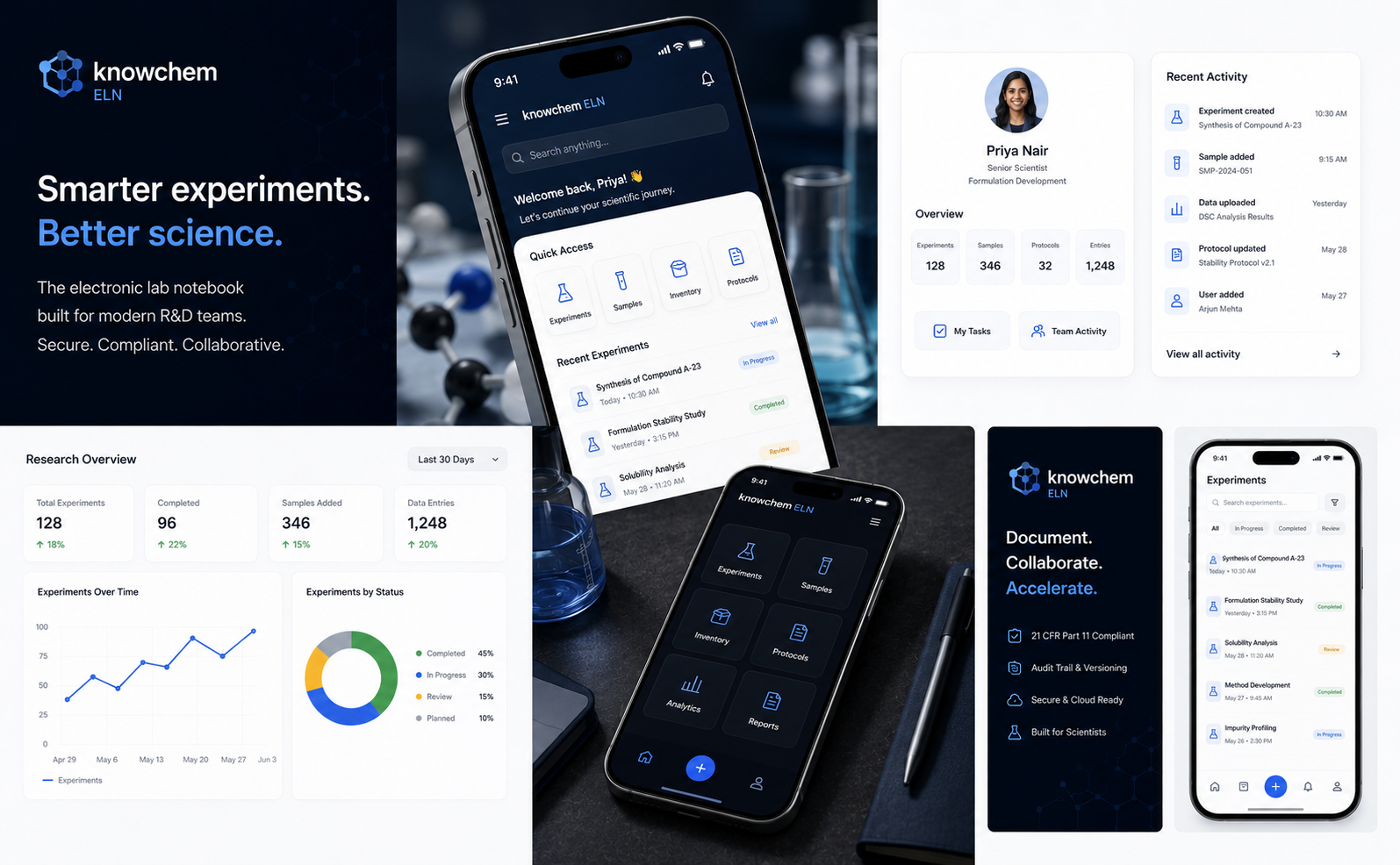
      KnowChem is an electronic lab notebook for chemistry teams that turns everyday bench work into searchable knowledge, surfacing efficiency, yield, and cost insight from the data labs already create®

(Problem)

Chemistry R&D still runs on paper notebooks and scattered spreadsheets. Experiments are written up by hand, the chemicals they use are tracked somewhere else entirely, and reviewer sign-off is a signature on a page that no one can search later.

When the record and the stockroom live apart, inventory drifts out of sync, low-stock surprises stall the bench, and reconstructing exactly what was done, with what, and who approved it becomes slow and error-prone.

(Year)
2026
KnowChem ELN
(Solution)

KnowChem makes the notebook and the stockroom one system. Every experiment is captured as structured data, raw materials, steps, analysis, and conclusion, and each reagent it consumes is deducted from a live, PubChem-enriched inventory.

Because the record is structured, the same data powers throughput analytics, yield optimisation, and automated ordering, turning everyday bench work into searchable, reusable lab knowledge.

(Impact)
  • Unified experiments and chemical inventory so lab work and stock stay in lockstep automatically.
  • Throughput analytics surface how long experiments actually take and where teams lose time.
  • Yield and cost insight reveal the best-performing conditions and where reagent spend really goes.
  • A searchable lab memory makes every past experiment instantly findable and reusable.
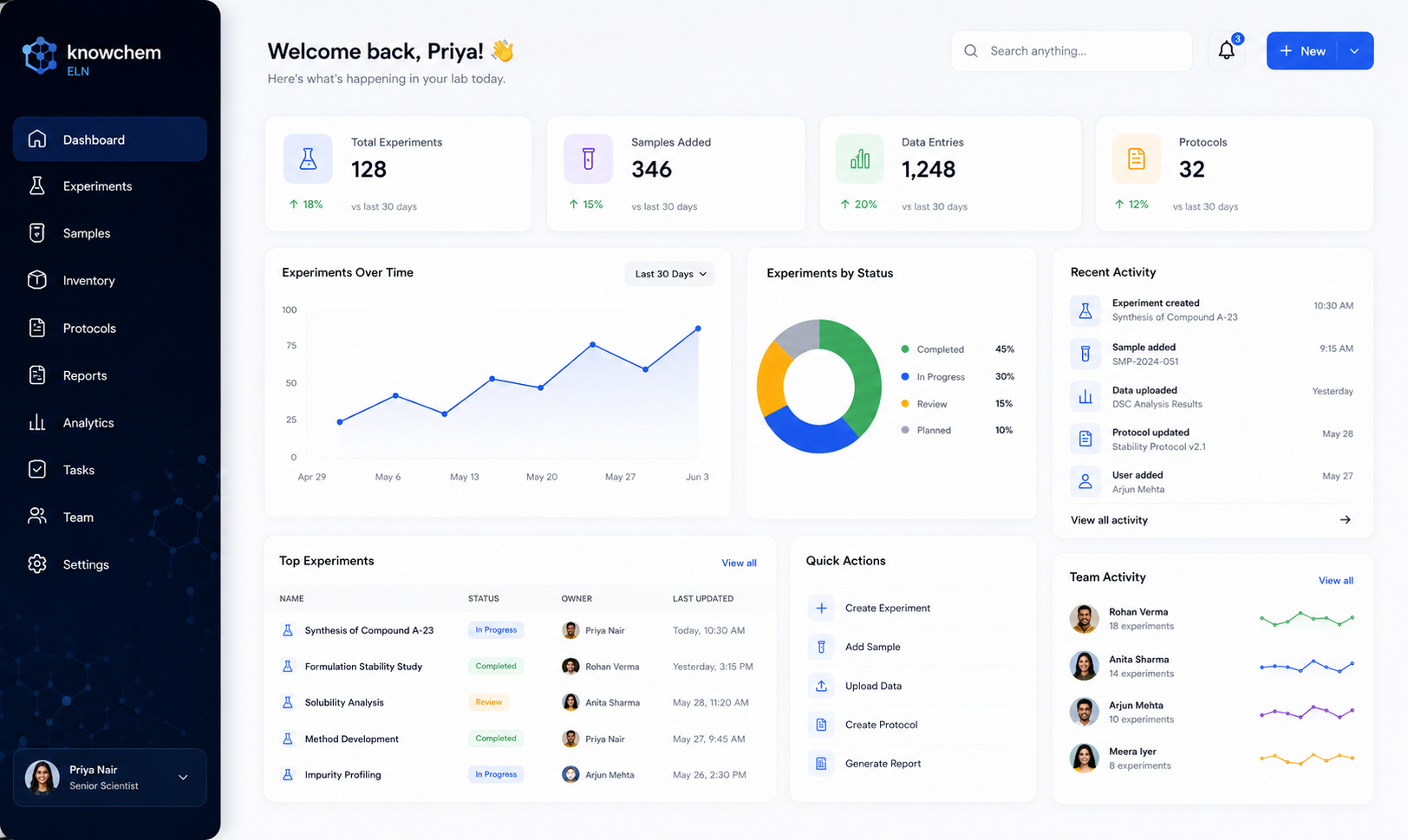
KnowChem ELN inventory
(02) (Technical design) Six pillars
01

Structured Experiments

A paper notebook entry is just prose. KnowChem turns each experiment into structured data: raw materials, process steps, analysis rows, TLC, observations, and a final conclusion.

Because the record is structured rather than freeform, it can be searched, reused, and reasoned about long after the bench work is done.

02

Connected Inventory

The notebook and the stockroom are one system. Every reagent is tracked with quantity, unit, and location, enriched automatically through a PubChem lookup, and experiments deduct what they consume in real time.

A built-in unit engine reconciles grams, millilitres, and their multiples, so stock stays accurate without anyone reconciling spreadsheets by hand.

03

Throughput Analytics

Because every experiment carries its own start and end timestamps, the system can measure how long work actually takes, by person, by project, by reaction type.

That turns into team efficiency: where time is really spent, which steps drag, and which experiments stall, so bottlenecks are visible instead of guessed at.

04

Yield & Optimization

When the same reaction is run again and again, the structured record becomes a dataset. KnowChem compares inputs and outcomes across repeats to surface what actually drives yield.

The result is a quiet recommendation engine: the conditions, quantities, and procedures that have historically produced the best results, ready for the next run.

05

Automated Ordering

Because consumption and planned experiments are both in the system, KnowChem can see a shortfall coming before it happens and assemble the purchase order itself.

Reorder thresholds, preferred suppliers, and pack sizes turn a low reagent into a ready-to-send order, so restocking becomes a quick approval rather than a manual chase.

06

Searchable Lab Memory

A lab's most valuable asset is everything it has already tried. Structured experiments make that history searchable by material, condition, or outcome.

Looking ahead, semantic search and an AI assistant will let a chemist ask "have we made this before, and how?" and pull the relevant past work in seconds.

(03) (Key learnings) Building KnowChem
01

Structuring the record at capture time is what unlocks everything downstream. Freeform notes can't be searched, measured, or optimised.

02

Unifying inventory with the experiment log removes a whole class of manual reconciliation, and the errors that come with it.

03

A consistent data model turns repeated experiments into a dataset, so analytics and recommendations come almost for free.

(04) (More works) © 2026
Chetto
Chetto® © 2025
Whatsapp Workflows
Pantry
Pantry® © 2026
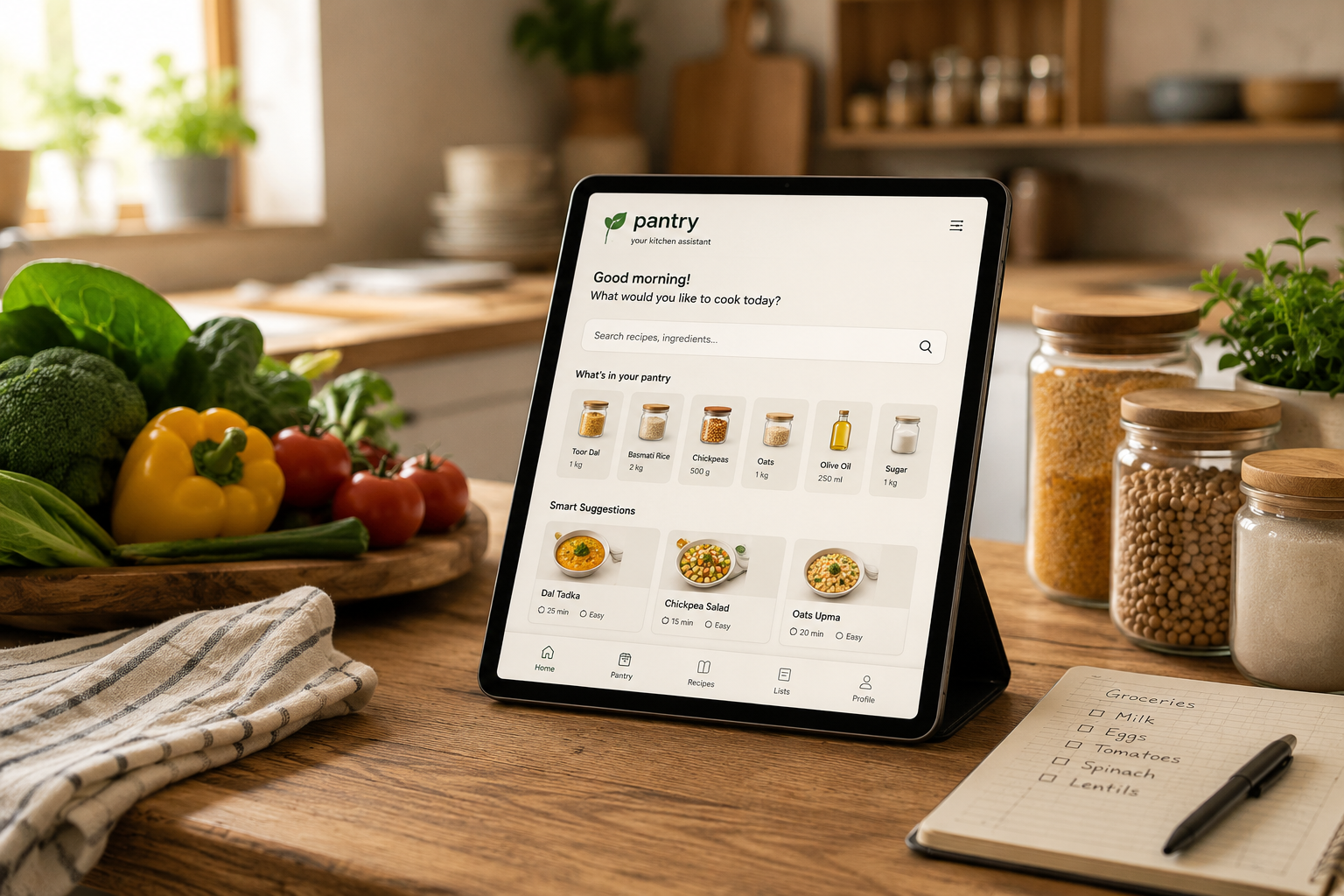
AI Kitchen Assistant
Beekind
Beekind® © 2024
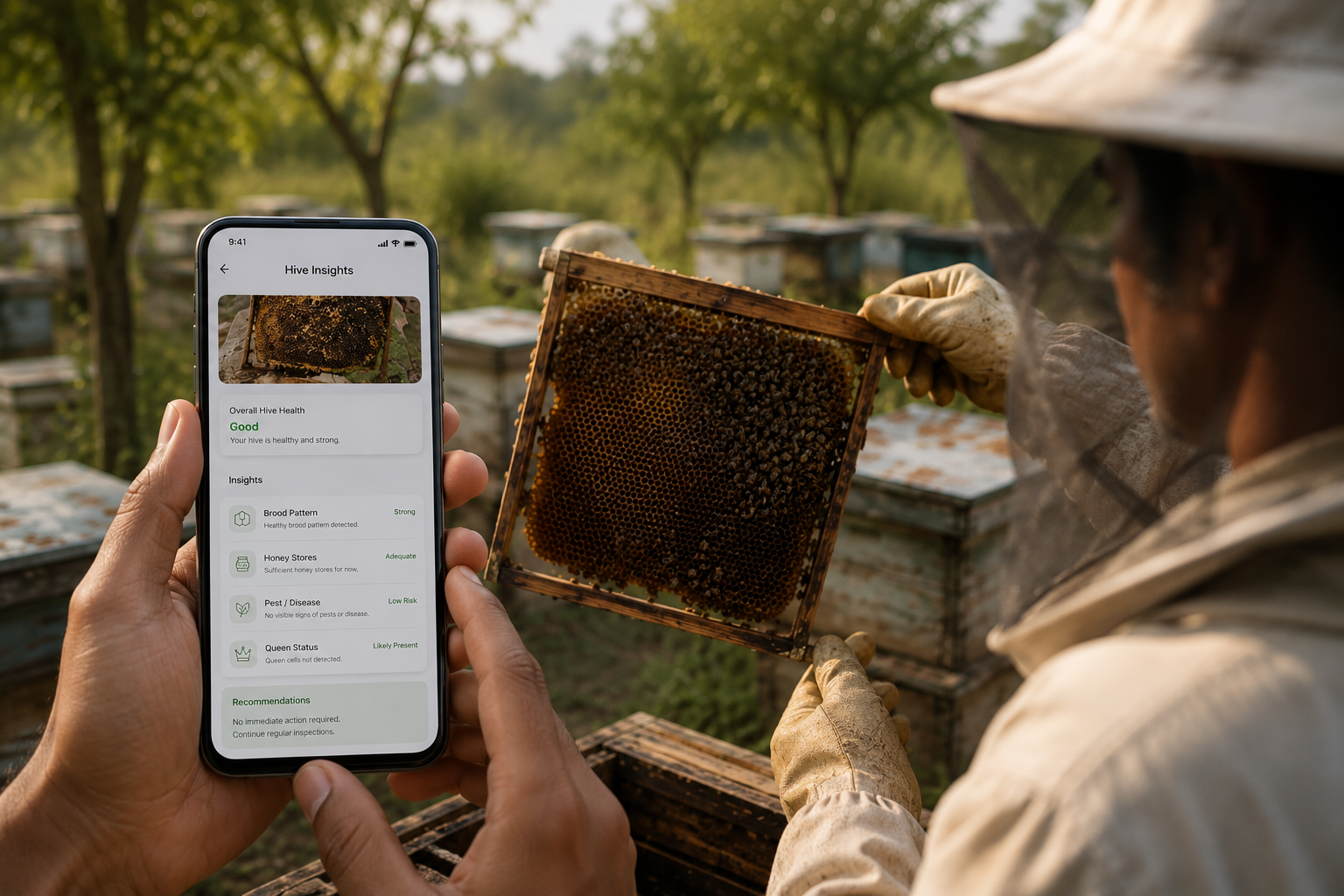
Smart Beekeeping Assistant

LET'S WORK
TOGETHER.

anannya0316@gmail.com +91 7796699769
ANANNYA